# Open-Back vs Closed-Back Headphones for Mixing and Recording
Open-back headphones are not a higher grade of closed-back headphones.
For most people, open-back headphones make more sense as a second studio pair than as a first pair.
Choose closed-back headphones if you record with microphones. Choose closed-back headphones if one pair must handle both recording and mixing. Choose open-back headphones when you work in a quiet room and need a dedicated pair for mixing or mastering.
That is the practical answer.
Make the decision in 30 seconds
Start with closed-back headphones if any of these conditions apply:
- You record vocals, narration, or acoustic instruments with a microphone.
- Other people share your room.
- Your computer, street, or room creates noticeable background sound.
- You work in a venue, rehearsal room, or mobile setup.
- One pair must cover recording, editing, and mixing.
Consider open-back headphones when all of these conditions apply:
- Microphone recording is not your main task.
- Your room is quiet.
- Sound can leak into the room without disturbing anyone.
- You need a dedicated pair for mixing or mastering.
- You already have closed-back headphones or another reliable option for recording.
If you are still unsure, choose closed-back headphones. They work in more situations.
The first difference is where the sound can go
Open-back earcups contain acoustically transparent areas. Music escapes into the room. Outside sound also reaches your ears.
Closed-back earcups use a solid outer housing. The earcups and pads reduce the amount of headphone sound that reaches the room. They also reduce the outside sound that reaches you.
This short Sennheiser comparison video shows the basic physical difference between the two designs.
Open-back headphones let sound move through the earcups. Closed-back headphones keep more sound inside. That difference changes what each design can do in a recording session.
Closed-back headphones protect a good take
Imagine that a singer completes the best take of the night. The performance is right, but the click track from the headphones is also audible during a quiet phrase.
That click entered the same microphone as the voice. Removing it later may damage the performance. A wider stereo image or a more open listening experience does not solve this problem.
Use closed-back headphones when a person is standing in front of an active microphone.
Closed-back headphones do not stop every sound. However, they make leakage easier to control than open-back headphones at the same listening level.
Neumann gives the same recommendation in its vocal recording video and step-by-step guide. The guide explains that open-back headphones can leak into a nearby vocal microphone.
Check these details before recording:
- Use only the headphone level that the performer needs.
- Make sure the pads seal evenly around the ears.
- Do not make the click brighter or louder than necessary.
- Listen to the microphone signal before recording the final take.
- Replace pads that have collapsed or lost their seal.
A dependable closed-back pair can protect a performance better than an expensive open-back pair that was designed for another job.
Why the Sony MDR-7506 remains a recording workhorse
The Sony MDR-7506 is a familiar example of a closed-back studio headphone.
This does not mean that it is the most accurate headphone for every listener. Its value comes from a practical combination of closed earcups, a folding structure, familiar sound, and daily durability.
Sony describes the MDR-7506 as a closed-ear professional monitor for broadcast and recording work.
A recording headphone does not need to look luxurious. It needs to be easy to hand to a performer. It needs to reduce leakage. It needs to survive repeated sessions. The engineer also needs to understand what it reveals and what it exaggerates.
These requirements explain why a practical closed-back model can remain useful for decades.
Open-back headphones make sense after the microphones are off
The job changes when the recording is finished.
The room is quiet. The microphones are off. You need to judge vocal position, reverb length, stereo width, and small balance changes for several hours.
This is where open-back headphones can become useful.
Open earcups do not trap the rear sound from the driver in the same way as closed earcups. Many open-back studio headphones are designed to provide a spacious stereo presentation. This can make it easier to study reverb, panning, and the relationship between central and wide elements.
Open-back headphones can help with these decisions:
- Compare the position of instruments on the left and right.
- Judge whether a vocal sits in front of the arrangement.
- Hear whether reverb fills too much of the available space.
- Separate central instruments from wide stereo effects.
- Work through small balance changes during a long session.
Use open-back headphones for dedicated mixing when your room is quiet and leakage does not matter.
Do not confuse a wide presentation with accuracy. An open design does not guarantee neutral bass, midrange, or treble. Each model still has its own tuning.
What the Sennheiser HD 600 shows about open-back design
The Sennheiser HD 600 is a familiar example of an open-back headphone.
Sennheiser describes the HD 600 as an open design for analytical and reference listening. Its earcups allow air and sound to move through an acoustically transparent structure.
That approach fits a quiet listening room. It does not fit every recording booth.
The HD 600 is not a higher-level version of the MDR-7506. The two headphones solve different problems.
Choose a closed-back model such as the MDR-7506 when you need to protect a microphone recording. Consider an open-back model such as the HD 600 when you want a dedicated listening reference in a quiet room.
The useful question is not which headphone is better. The useful question is which job you need to finish.
Closed-back headphones can still make a good mix
The claim that closed-back headphones cannot be used for mixing is wrong.
Do not replace a familiar closed-back pair only because someone says that open-back headphones are always better for mixing.
A familiar headphone already gives you valuable information. You know how released music sounds through it. You know where the vocal normally sits. You know when the treble becomes uncomfortable. You may also know how mixes made with that headphone translate to a car, a sound system, or another pair.
That experience can matter more than the earcup design of an unfamiliar headphone.
Closed-back headphones can also provide a more reliable working condition in a noisy room. Raising the level of open-back headphones to overcome outside sound is not a better monitoring method.
Beyerdynamic makes a similar distinction in its studio headphone selection guide. It connects closed-back headphones with recording and isolation. It connects open-back headphones with mixing in controlled spaces. It also recommends closed-back models for mixing in noisy environments.
If your mix sounds right on headphones but fails on audio systems, the problem may involve more than the earcup design. Read Why Does My Mix Sound Good on Headphones but Wrong on Speakers? for a separate explanation of stereo presentation, room response, listening level, and mix translation.
Open-back headphones can record some sources
Open-back headphones can be used when no microphone can capture their leakage.
This includes several common tasks:
- Record an electronic instrument through a direct input.
- Play a virtual instrument with a MIDI keyboard.
- Program software instruments.
- Edit audio without an active microphone.
Switch to closed-back headphones when a nearby microphone becomes part of the session.
The fact that open-back headphones can record a direct signal does not make them a good default for microphone recording. A possible use and a recommended use are not the same thing.
Open-back does not mean weak bass
It is too simple to say that open-back headphones have weak bass and closed-back headphones have strong bass.
The enclosure affects low-frequency behavior, but the final result also depends on the driver, pads, damping, and complete acoustic design. Two open-back models can have very different bass. Two closed-back models can also sound very different.
Fit matters as well. Glasses, hair, worn pads, and cup position can change the seal. A poor seal can cause a large bass change, especially with closed-back headphones.
Use the enclosure type to choose a working environment. Judge tonal balance model by model. Do not combine those two decisions.
Buy closed-back headphones first if you need one pair
Start with closed-back headphones when you need one studio pair.
They can support microphone recording. They can work in a room with outside sound. They can also support editing and mixing.
Add open-back headphones later when your work creates a clear reason for a second pair:
- You already have reliable headphones for recording.
- You now mix in a quiet room.
- You want a second view of stereo space and reverb.
- You need a dedicated pair for long mixing sessions.
- You want a reference that is independent from your main closed-back pair.
Do not worry if your budget allows only one pair. Learning one headphone and checking the result on other playback systems is more useful than switching among several unfamiliar headphones.
The final choice
Choose closed-back headphones when you record with microphones.
Choose closed-back headphones when outside sound is present.
Choose closed-back headphones when one pair must cover recording and mixing.
Choose open-back headphones when you mix or master in a quiet room and sound leakage is not a problem.
Add open-back headphones when you already have a recording solution and need a second listening perspective.
Open-back headphones are not an upgrade from closed-back headphones. Closed-back headphones are not a cheaper substitute for open-back headphones. The two designs solve different working problems.
Compare the tonal balance of other headphones
Choosing an enclosure and comparing headphone tonality are separate tasks.
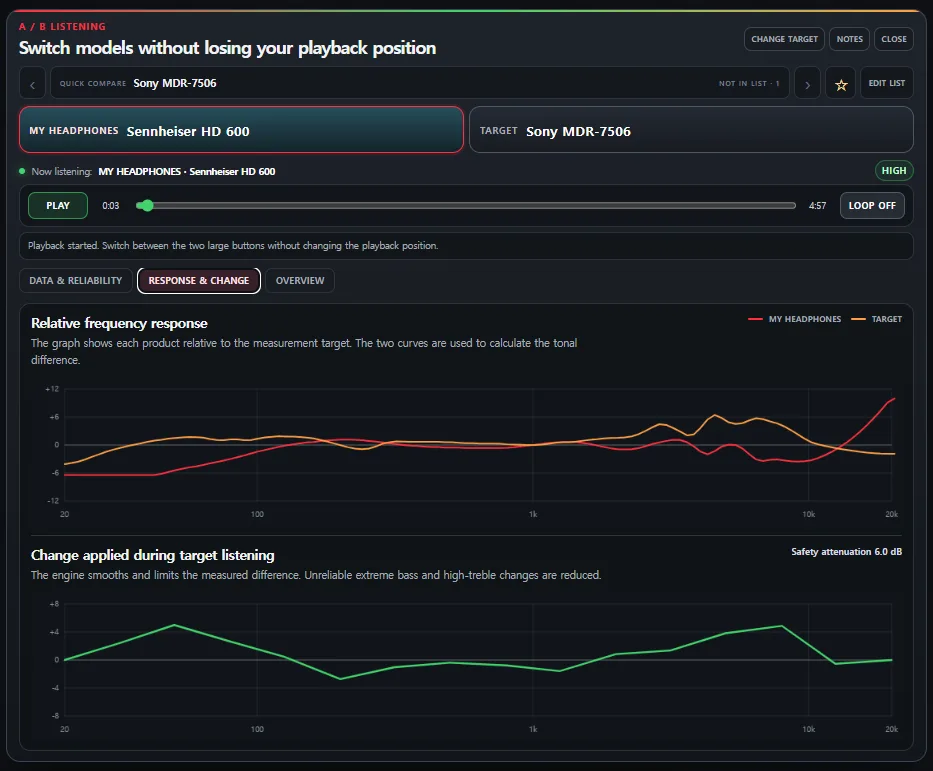
SolAudioLab provides Virtual Headphones for listeners who want to explore how other headphone models may change tonal balance.
The tool uses the headphones you are wearing as the starting point. It compares their measured response with another model. You can use familiar music to hear how the bass, vocal range, and treble may shift.
The browser version does not upload the selected audio file to SolAudioLab. It processes the audio on your device.
Virtual Headphones does not reproduce physical isolation, sound leakage, fit, or the complete spatial presentation of another headphone. It provides a tonal reference before a real listening test. It does not replace that test.
Compare headphone tonality with Virtual Headphones
Read How Virtual Headphones Works for a detailed explanation of the measurements, processing, and practical limits.