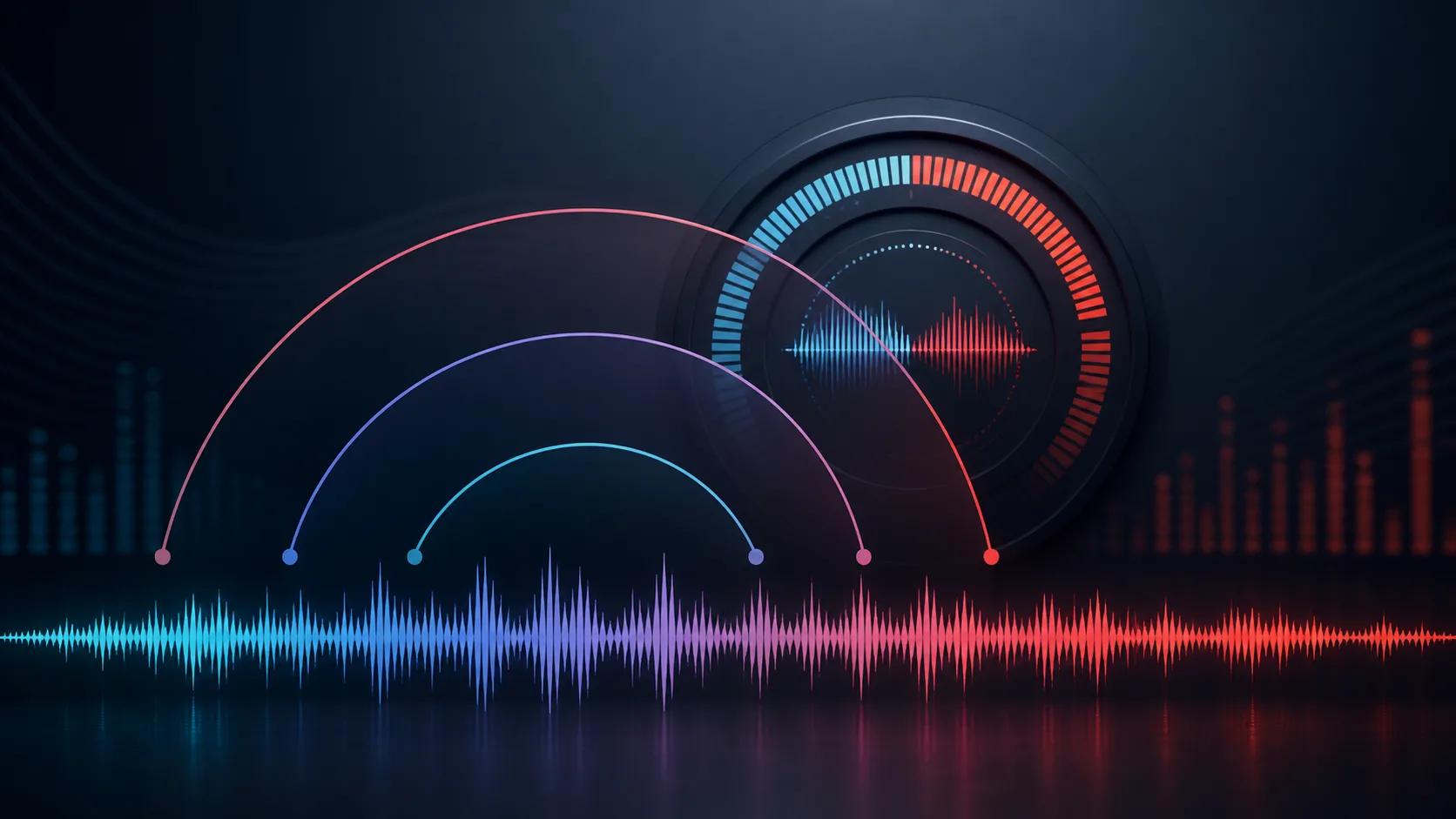
Why Does the Same Mix Sound Different at Different Volumes?
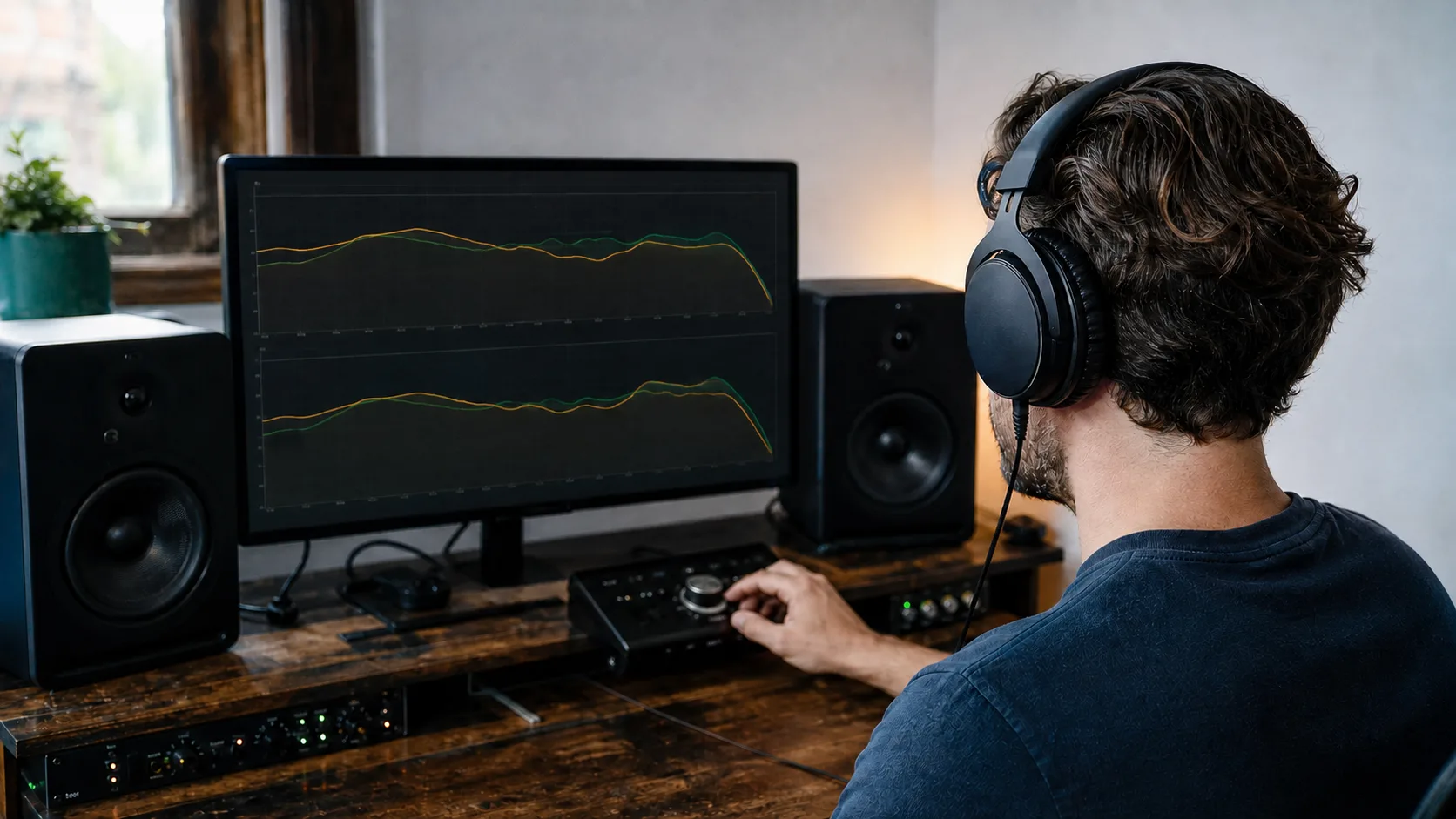
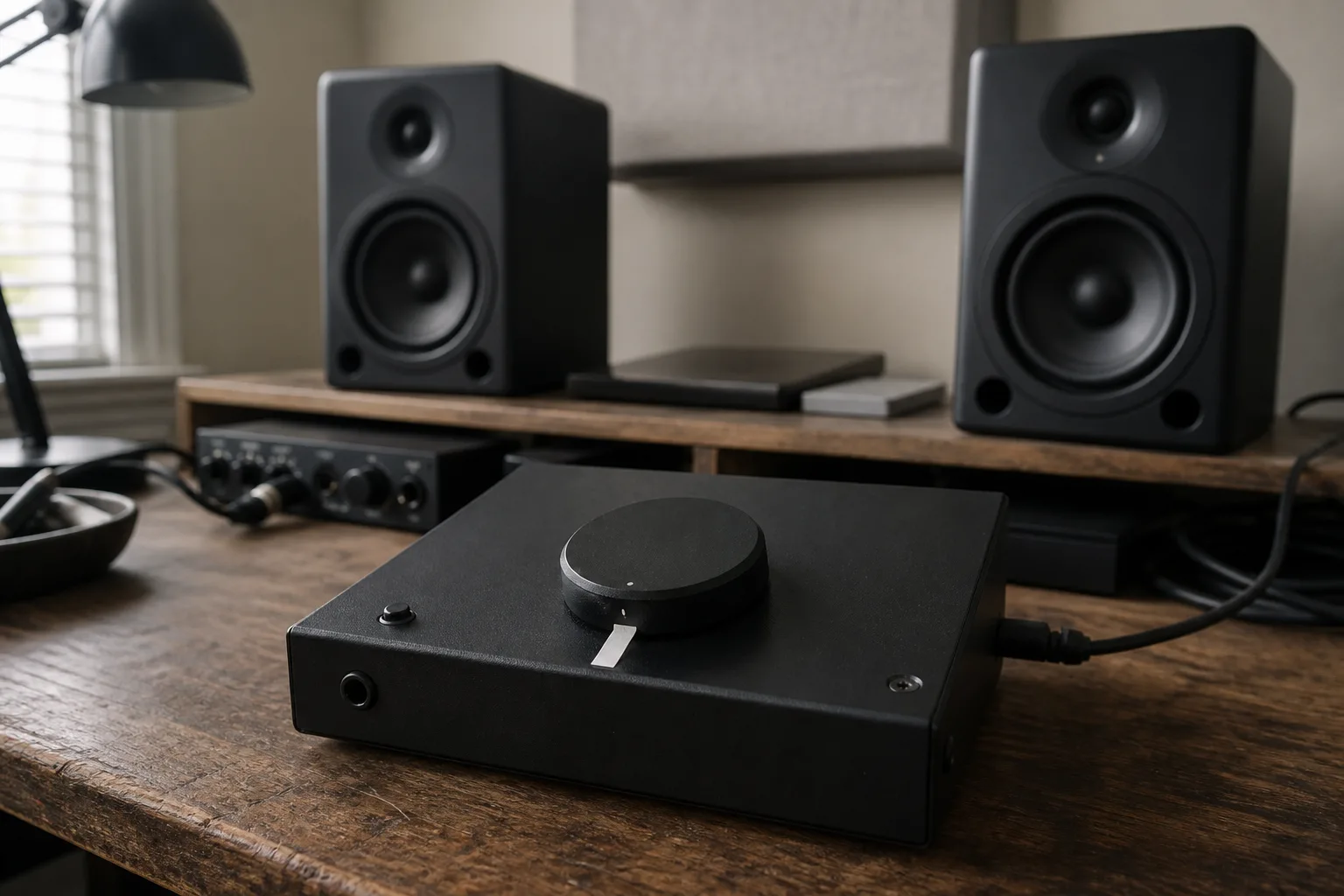
The mix has not changed—your hearing has. Learn how one repeatable reference level makes quiet and loud playback checks useful without sending your EQ decisions in circles.
Read articlePractical audio knowledge
Clear field notes about acoustics, monitoring, loudness, audio testing, rehearsal spaces, and music production. Written to help you make a practical decision and get back to listening.
Field notes
The mix has not changed—your hearing has. Learn how one repeatable reference level makes quiet and loud playback checks useful without sending your EQ decisions in circles.
Read article
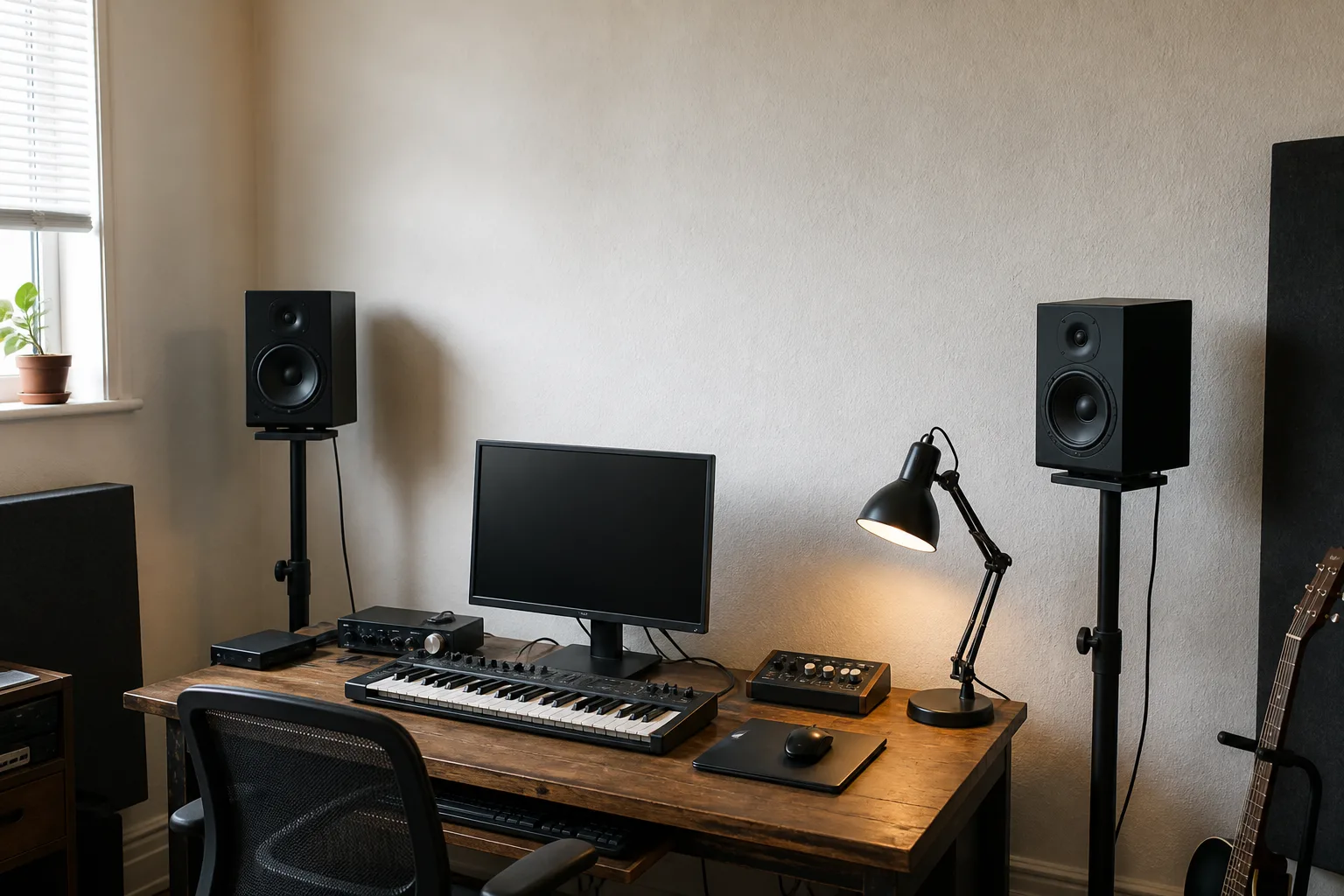
There is no single correct speaker-to-wall distance. Learn how wall reflections affect bass, why an awkward middle distance can cause deep cancellations, and how to find a practical position in your room.
Read article
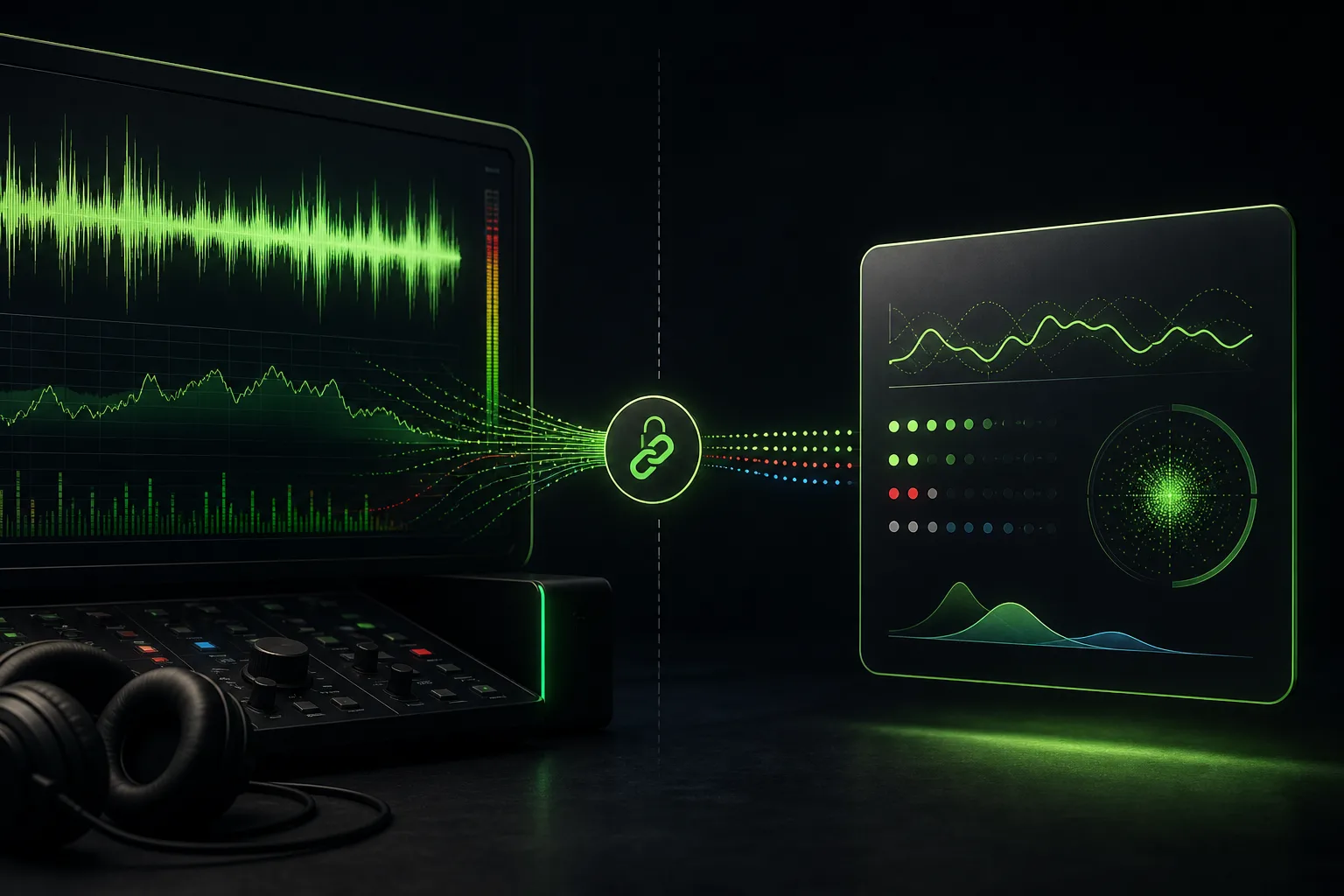
Create an unlisted, read-only Audio Analyzer report with LUFS, true peak, waveform data, and practical suggestions—without uploading the original audio.
Read article
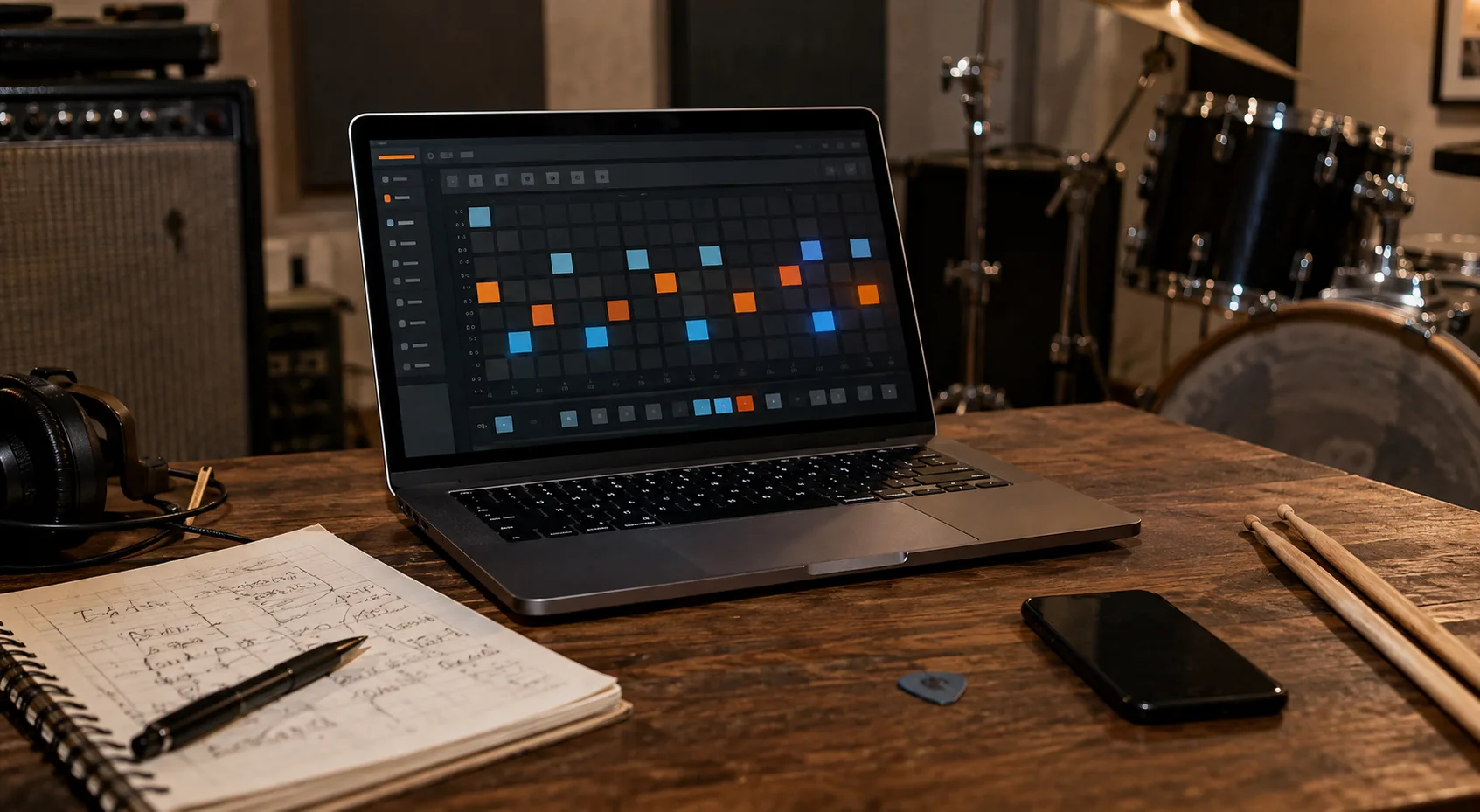
A rhythm idea is difficult to explain with words or screenshots. A playable browser link lets another person hear the groove, change the tempo, and develop the pattern immediately.
Read article
LUFS measures perceived loudness over time. Learn what Integrated, Short-term, and Momentary LUFS mean, how they differ from peaks, and how to check your own audio.
Read articleTRANSLATE
Use your browser’s built-in translation feature to read this article in your language.
Chrome: Right-click the page → Translate · Edge: Right-click → Translate